

Every August, we notice the same pattern in clinic. Patients who felt their skin was looking brighter and more even during the spring suddenly begin to notice patches of pigmentation becoming darker, more visible, and harder to conceal. For many, it feels as though their melasma has appeared out of nowhere. In reality, the process has often been developing quietly throughout the summer.
Melasma is one of the most frustrating pigmentation conditions to manage because it is influenced by multiple triggers, many of which become more active during the warmer months.
At LIV Dermatology in San Antonio, we regularly help patients navigate melasma and other forms of pigmentation. While summer can certainly make these conditions more challenging, understanding why it happens is often the first step toward gaining better control over it.
What Is Melasma?
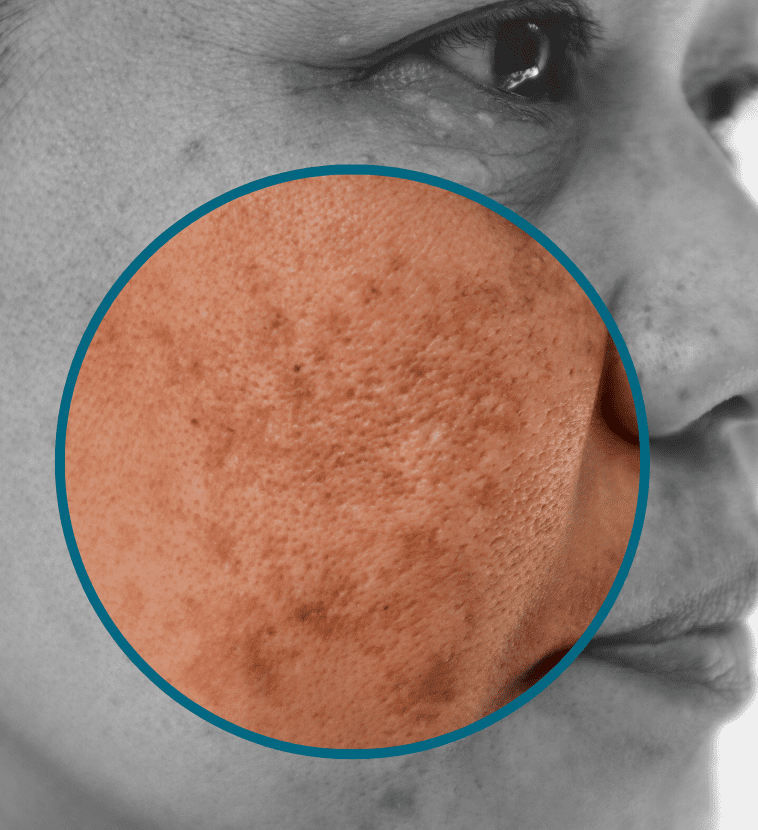
Melasma is a chronic pigmentation condition that causes patches of darker skin to develop, most commonly on the cheeks, forehead, upper lip, chin, and jawline. The discoloration often appears symmetrically on both sides of the face and can range from light brown to gray-brown in color.
Unlike freckles or age spots, melasma develops when melanocytes, the cells responsible for producing pigment in the skin, become overactive. Once triggered, these cells can continue producing excess pigment for extended periods, which is why melasma can be particularly persistent and prone to recurring.
While melasma is most common in women, men can also develop the condition. It is usually influenced by a combination of factors that stimulate pigment production and make existing pigmentation more noticeable.
Why Does Melasma Get Worse During Summer?
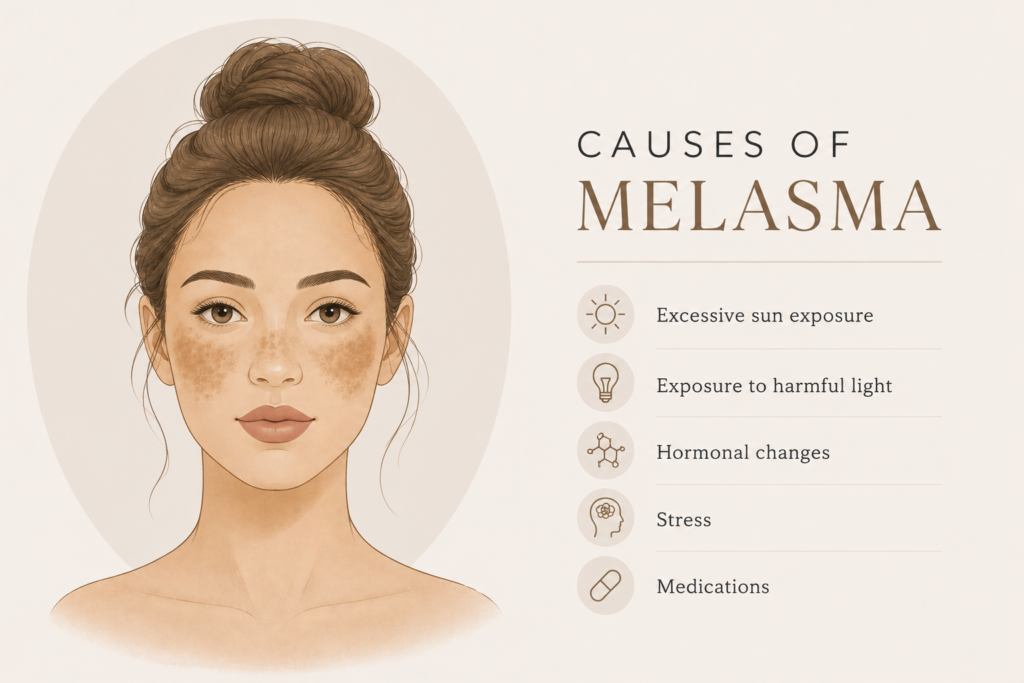
While UV exposure is the most obvious trigger, the relationship between summer and melasma is more complex than many people realize.
Sunlight Stimulates Pigment Production
Ultraviolet (UV) radiation is one of the biggest triggers for melasma because it stimulates melanocytes to produce more pigment. The challenge is that significant sun exposure is not always necessary. In clinic, we often see patients whose pigmentation has worsened despite avoiding long days in the sun. Everyday activities such as driving, walking the dog, eating lunch outdoors, or sitting near a window can expose the skin to enough UV radiation to gradually darken existing pigmentation.
Over time, this exposure accumulates, making melasma more noticeable and often more difficult to manage.
Heat Can Trigger Melasma
Many patients are surprised to learn that heat itself can worsen melasma.
Research has shown that elevated skin temperatures can stimulate melanocytes independently of UV exposure. This means that activities such as exercising outdoors, spending time in hot climates, or prolonged exposure to summer heat may contribute to pigmentation flare-ups. This is one reason why patients sometimes notice worsening melasma despite being diligent with sunscreen.
Visible Light Can Also Play a Role
Visible light, particularly blue light, has been shown to contribute to pigmentation in certain skin types. This means that even when UV levels are reduced, pigmentation pathways may still remain active.
Is Melasma Different From Sun Damage?
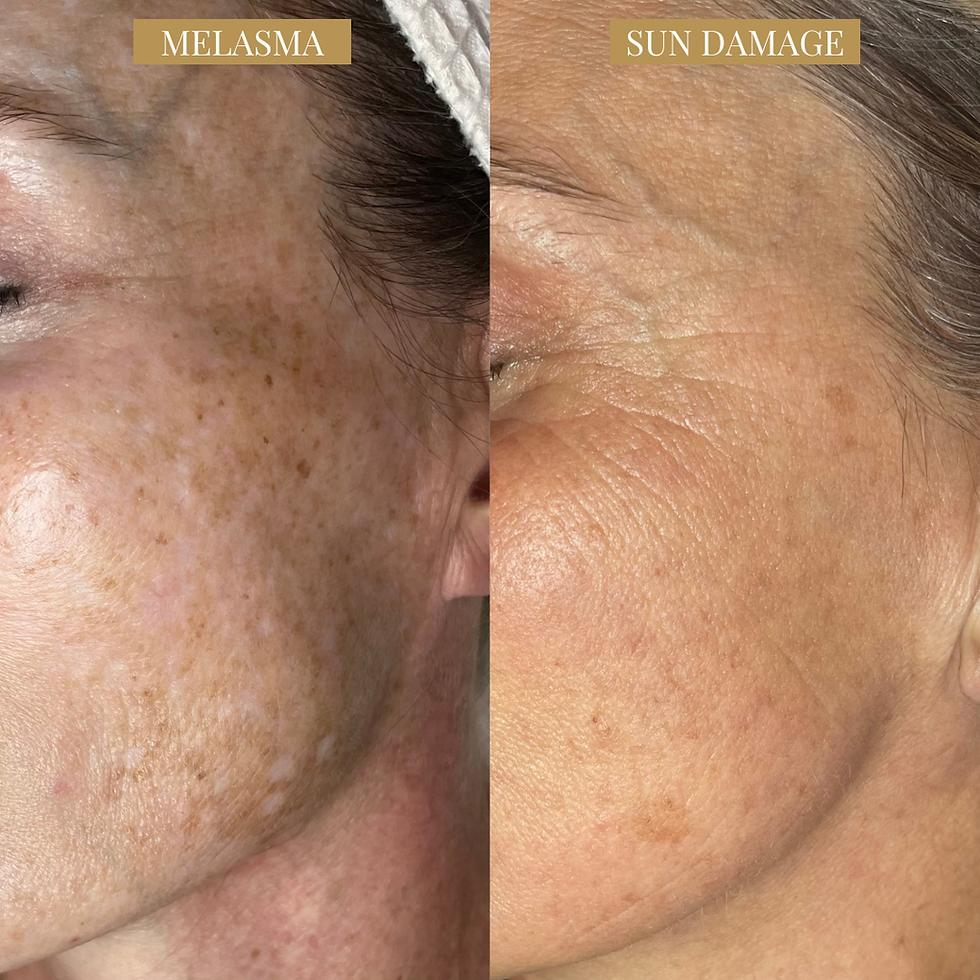
Although both conditions involve excess pigment, they develop differently.
Sunspots and solar lentigines are primarily caused by cumulative sun exposure over time. Melasma, however, involves a more complex interaction between hormones, genetics, inflammation, heat, and UV radiation.
In clinic we often see patients who have both conditions simultaneously. This is why treatment plans frequently need to address multiple types of pigmentation rather than focusing on a single cause.
Which Treatments Work Best For Melasma And Pigmentation?
Treatment selection depends on several factors, including:
- Depth of pigmentation
- Skin type
- Severity
- Previous treatment history
- Presence of redness or inflammation
- Lifestyle and sun exposure habits
At LIV Dermatology, treatment plans are customized rather than relying on a single solution.
BBL (BroadBand Light)
BBL is one of the most effective treatments available for many forms of pigmentation and sun damage.
This advanced light-based technology targets excess pigment within the skin while also improving overall skin tone and clarity. BBL can be particularly effective for sunspots, uneven pigmentation, and discoloration caused by cumulative UV exposure.
Patients often appreciate that BBL addresses multiple concerns simultaneously, including:
- Pigmentation
- Redness
- Uneven skin tone
- Early signs of photoaging
However, not all pigmentation behaves the same way. In some cases, aggressive treatment can actually stimulate further pigmentation if not properly planned. This is why assessment and treatment customization are so important.
MOXI Laser
MOXI has become increasingly popular for patients seeking a gentler approach to skin rejuvenation and pigmentation management.
MOXI works by creating controlled microscopic zones within the skin, stimulating repair and renewal while improving overall tone and texture. It is particularly useful for early sun damage, uneven pigmentation, and maintaining healthy-looking skin.
For patients with mild pigmentation concerns, MOXI may be used as a standalone treatment. For patients with more established pigmentation, MOXI is often incorporated into a broader treatment plan.
One of its biggest advantages is that it offers meaningful skin improvement with relatively minimal downtime compared to more aggressive resurfacing procedures.
Halo™ Laser
When pigmentation is more advanced or accompanied by textural concerns, Halo™ can be an excellent option.
Halo is the world’s first hybrid fractional laser, combining ablative and non-ablative wavelengths in a single treatment. This allows it to address both superficial pigmentation and deeper skin remodeling simultaneously.
Halo is commonly used to improve:
- Sun damage
- Uneven pigmentation
- Fine lines
- Enlarged pores
- Acne scars
- Overall skin texture
In more advanced cases, we would normally look at Halo when patients are seeking more significant correction rather than maintenance alone.
Many patients appreciate that Halo not only targets pigmentation but also improves overall skin quality, creating brighter, smoother, healthier-looking skin.
Can Treatments Be Combined?
Combination treatment plans often deliver the most comprehensive and natural-looking outcomes.
One of the most popular approaches involves combining BBL and MOXI.
BBL focuses on pigment and discoloration while MOXI supports skin renewal, texture improvement, and collagen stimulation. Together, they address multiple aspects of skin quality in a way that often produces more balanced results than either treatment alone.
For patients with more extensive pigmentation and signs of aging, Halo may become part of a longer-term treatment strategy.
The exact sequence depends on the patient’s skin condition, goals, and how aggressively the pigmentation needs to be addressed.
What Else Helps Prevent Melasma From Returning?
Treatment is only one part of successful melasma management.
Long-term improvement typically requires:
- Daily broad-spectrum sunscreen
- Consistent sun protection habits
- Wearing hats outdoors
- Avoiding unnecessary heat exposure where possible
- Medical-grade skincare when appropriate
- Regular maintenance treatments when recommended
Patients who achieve the best outcomes are usually those who view melasma as an ongoing skin condition rather than a one-time treatment issue.
Frequently Asked Questions About Melasma
Does melasma get worse every summer?
For many patients, yes. Increased UV exposure, heat, and visible light can all contribute to melasma flare-ups during warmer months.
Is melasma permanent?
Melasma is considered a chronic condition. While it can often be significantly improved, ongoing management is usually required to maintain results.
What is the best treatment for melasma?
There is no single best treatment for everyone. The most effective approach depends on skin type, severity, pigment depth, and individual triggers.
Can laser treatments make melasma worse?
Inappropriately selected treatments can sometimes worsen pigmentation. This is why professional assessment and treatment planning are essential.
Is BBL or Halo better for pigmentation?
They serve different purposes. BBL is often excellent for superficial pigmentation and discoloration, while Halo can address both pigmentation and deeper skin rejuvenation concerns. Your provider can determine which option is most appropriate.
Can BBL and MOXI be performed together?
Yes. This is one of the most popular combination treatments for improving pigmentation, sun damage, skin tone, and overall skin quality.
Taking The Next Step
If your melasma or pigmentation seems noticeably darker every August, you’re not imagining it. Summer conditions can significantly influence how pigmentation behaves, particularly in patients who are already prone to melasma.
At LIV Dermatology in San Antonio, we take a personalized approach to pigmentation management, combining advanced technologies such as BBL, MOXI, and Halo™ with expert assessment and long-term treatment planning. Whether you’re noticing early discoloration or dealing with longstanding melasma that keeps returning each summer, book a consultation to determine the most appropriate path forward for your skin and your goals.
The sooner pigmentation is addressed, the easier it often becomes to manage. Booking a consultation is the best place to start.