

When we think about restoring lost volume, dermal fillers and traditional fat transfer are often the first treatments that come to mind. Both have an established place in aesthetic medicine, but neither is suitable for everyone, particularly patients who want to restore soft-tissue volume without undergoing liposuction.
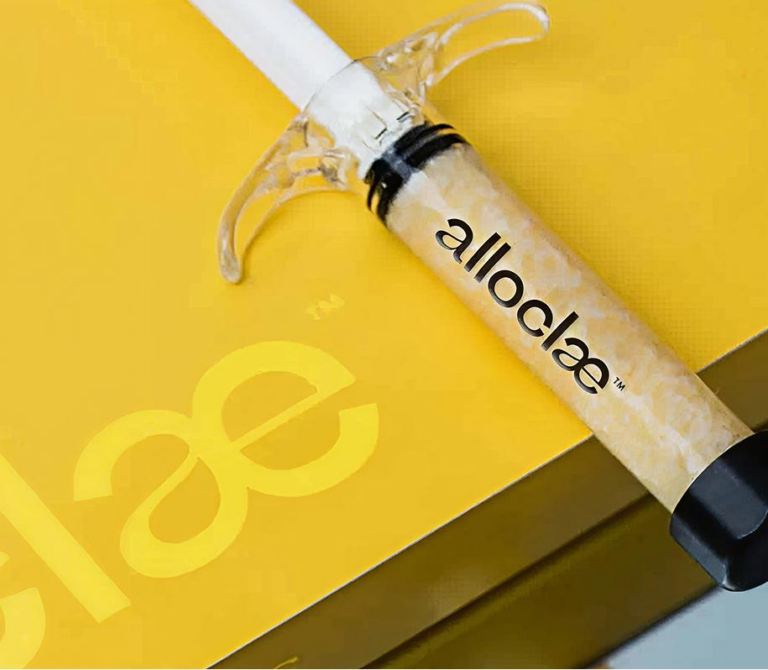
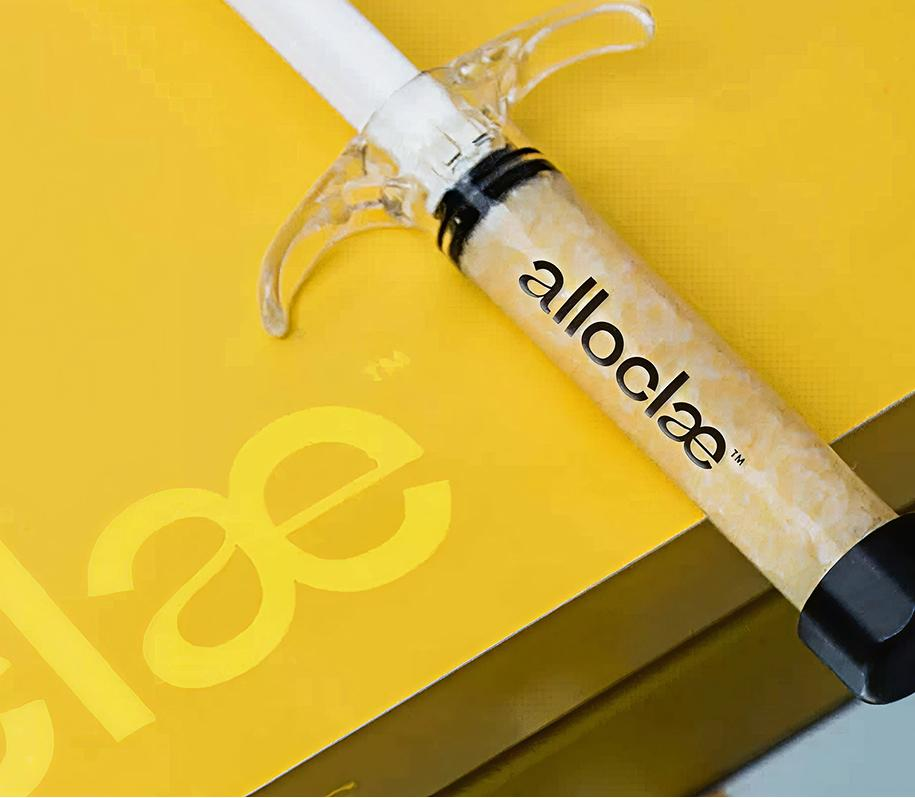
At LIV Dermatology in San Antonio, alloClae® offers a different approach. Made from specially processed donated human fat tissue, it is designed to restore volume, smooth contour irregularities and provide support in areas where natural fat has been lost.
Unlike conventional fat-reduction treatments, alloClae addresses the opposite concern: areas that appear hollow, uneven or depleted due to insufficient volume, offering another option for patients seeking natural-looking body contour restoration.
What Is alloClae and How Does It Work?
alloClae is a volume restoration treatment that uses a specially processed human fat tissue matrix to improve body contours. Unlike traditional fat transfer, which requires fat to be harvested from the patient’s own body, alloClae uses carefully screened donor tissue that has already been prepared for treatment.
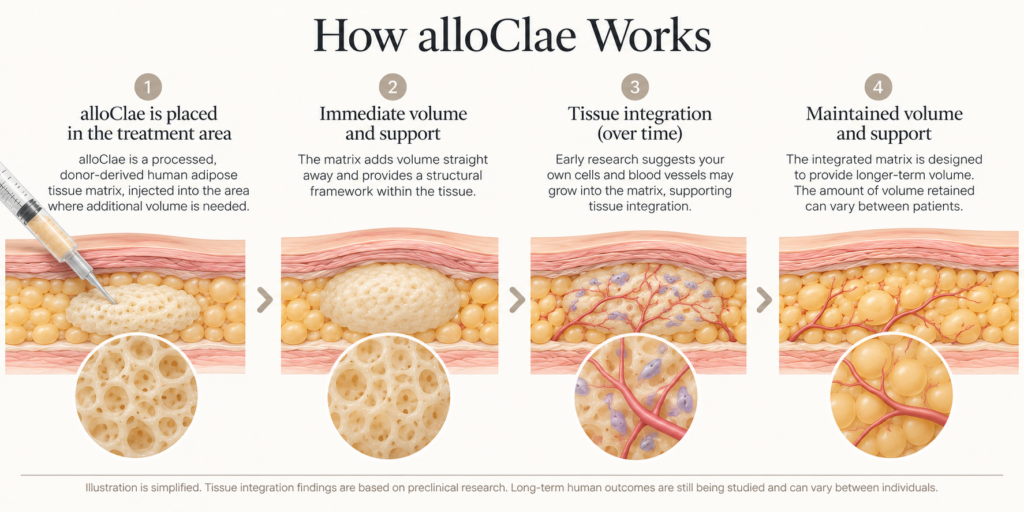
During processing, living cells are removed while the natural structure of the fat tissue is preserved. This includes its supporting framework, known as the extracellular matrix, which helps provide shape, cushioning and structural support.
Once placed beneath the skin, alloClae immediately adds volume to the treated area. However, what makes the treatment particularly interesting is how the matrix may interact with the surrounding tissue over time.
Early research suggests that the patient’s own cells and blood vessels can gradually grow into this framework, supporting the formation of new fat tissue within the treated area. In this way, alloClae provides an initial structure that the body may progressively integrate with its own tissue.
This approach is intended to provide lasting volume restoration, although longer-term human studies are still needed to establish exactly how much volume is retained over time.
How Is alloClae Different From Traditional Fat Transfer?
Traditional fat transfer involves removing fat from an area such as the abdomen or thighs using liposuction, processing it and transferring it to another area where additional volume is needed.
Although effective for appropriately selected patients, the procedure requires sufficient donor fat and involves recovery at both the harvesting and treatment sites. Some transferred fat may also be reabsorbed if it does not establish an adequate blood supply, which can affect the final volume.
alloClae eliminates the harvesting stage, making it an alternative worth considering for patients who want targeted volume restoration without undergoing liposuction.
This may be particularly beneficial for leaner patients who have limited donor fat or those seeking smaller, more precise contour corrections.
However, the two approaches are not interchangeable. Traditional fat transfer may remain more appropriate when substantial volume replacement is required, while alloClae may be considered for selected areas where a more targeted approach is suitable.
What Areas Can alloClae Treat?
Because alloClae is designed to replace adipose tissue, it can be considered in areas where natural fat contributes to shape, cushioning and support.
Potential applications include:
- Hip dips: Adding volume to natural indentations around the hips.
- Buttock contouring: Improving shape, symmetry and localized areas of volume loss.
- Post-weight-loss changes: Restoring soft-tissue volume in areas that have become flatter or hollow.
- Post-liposuction irregularities: Smoothing selected depressions or uneven contours.
- Breast contouring: Addressing certain volume irregularities, asymmetry or visible implant edges.
The amount of correction required varies considerably between these concerns. A shallow indentation following liposuction, for example, is different from significant volume loss after weight reduction.
At LIV Dermatology, we would assess the surrounding tissue, skin quality and overall body proportions before determining whether adding volume is likely to achieve the desired improvement.
Who Is a Good Candidate for alloClae?
The most suitable candidates are generally patients whose primary concern is insufficient soft-tissue volume rather than excess fat or significant skin laxity.
This distinction is especially important following weight loss. As body fat decreases, areas such as the hips and buttocks may lose some of their natural fullness. However, a flatter appearance does not always mean that volume replacement alone will provide the best result.
For example, someone with a localised hollow and relatively firm skin may be a more straightforward candidate than someone with substantial loose skin and widespread volume loss.
We would also consider whether the concern relates to natural anatomy, previous surgery or changes in body composition. Patients with limited donor fat may find alloClae particularly appealing because treatment does not require fat harvesting.
The aim is to establish whether the missing volume can be corrected effectively and whether the expected improvement is realistic. In cases involving substantial tissue laxity or larger contour changes, a different procedure or staged treatment plan may be more appropriate.
What Is Recovery Like and How Long Does alloClae Last?
One of the main advantages of alloClae is its relatively short recovery period compared with traditional fat transfer. Because no liposuction is required, there is no separate donor site to heal. According to the manufacturer, most patients can return to normal daily activities within 24 to 48 hours, although some swelling, bruising or tenderness may occur. Specific aftercare instructions will depend on the treatment area and individual response.
alloClae is also designed to provide lasting volume restoration. Early research suggests that the body’s own cells and blood vessels can gradually integrate with the fat matrix, supporting the development of new adipose tissue within the treated area.
While these findings are promising, longer-term human studies are still needed to establish how much volume is retained over time. Results may also be influenced by factors such as significant weight changes and individual tissue response, so permanent results cannot currently be guaranteed.
Can alloClae Be Combined With Other Body Contouring Treatments?
Yes, particularly when volume loss is accompanied by loose skin or uneven body contours. This is common following significant weight loss, when restoring lost fat alone may not fully address changes in skin firmness or overall shape.
Where skin laxity is a concern, treatments such as BodyTite may be considered to promote tissue contraction while addressing selected areas of excess fat. Morpheus8 uses radiofrequency microneedling to improve skin firmness and texture, while Sofwave stimulates collagen production to address skin laxity in suitable areas.
However, not every contour concern requires multiple treatments. Hip dips may be related to natural anatomy and fat distribution, while a flatter buttock after weight loss may involve both reduced volume and loose skin. Similarly, an indentation following liposuction requires a different approach from general skin laxity.
For isolated volume loss, alloClae alone may be sufficient. Where several concerns are present, we would assess the underlying tissue, skin quality and overall proportions before considering a staged treatment plan. The aim is to restore natural-looking contours without adding unnecessary volume or treatments.
Frequently Asked Questions About alloClae
When Will I See Results From alloClae?
The initial increase in volume is visible immediately after treatment. However, swelling can temporarily influence the appearance, so the final contour should be assessed once the area has settled.
Is alloClae Safe?
alloClae is supplied as a human cell and tissue product, with donor screening and tissue testing requirements. However, all procedures carry potential risks, including infection, bruising, discomfort, nodules, tissue reactions and contour irregularities. A consultation should include a discussion of the known risks, limitations and suitability of the treatment.
Can alloClae Move After Treatment?
As with other implanted soft-tissue materials, correct placement and appropriate aftercare are important. Patients should follow their practitioner’s guidance regarding pressure, exercise and activity while the treated area settles. Long-term human data on alloClae-specific complications remain limited.
Can alloClae Be Used After Previous Body Contouring Surgery?
Potentially. Selected contour irregularities or areas of volume deficiency following previous procedures may be suitable for correction. However, scar tissue, previous treatment history and the condition of the surrounding tissues must be assessed before proceeding.
Who Should Avoid alloClae?
Manufacturer guidance identifies severe allergen sensitivities, a history of anaphylaxis and active infection as reasons not to use the product. Other medical conditions, medications or previous procedures may also affect suitability and should be discussed during consultation.
Considering alloClae in San Antonio?
Restoring natural-looking volume begins with understanding why an area has changed. For some patients, the concern is a localised lack of fat, while others may have a combination of volume loss, skin laxity and uneven contours.
At LIV Dermatology, we take these differences into account when assessing treatment options, focusing on proportionate improvements that complement your natural anatomy.
If you are exploring alloClae in San Antonio or traveling from surrounding Texas communities, booking a consultation is an opportunity to discuss your concerns, understand the available options and determine whether targeted volume restoration or a broader treatment plan is most appropriate.