

Dryness, tightness, stinging, redness and sudden sensitivity can all seem like separate skin concerns. Often, however, they have something important in common: the skin barrier is struggling to do its job.
Your skin barrier is the outermost protective layer of your skin. When it is healthy, it helps retain moisture while limiting the entry of irritants and other environmental stressors. When that barrier becomes disrupted, skin can lose water more readily and become increasingly reactive.
This is why adding another active ingredient or exfoliating treatment is not always the answer to skin that suddenly looks dull, rough or dehydrated. Sometimes the first priority is much simpler: restoring the skin barrier and giving it time to recover.
At LIV Dermatology in San Antonio, we often see patients who believe their skin needs more exfoliation when it is actually showing signs of irritation or barrier disruption. Identifying that difference matters because the treatment approach is very different.
What Is the Skin Barrier and Why Is It So Important?
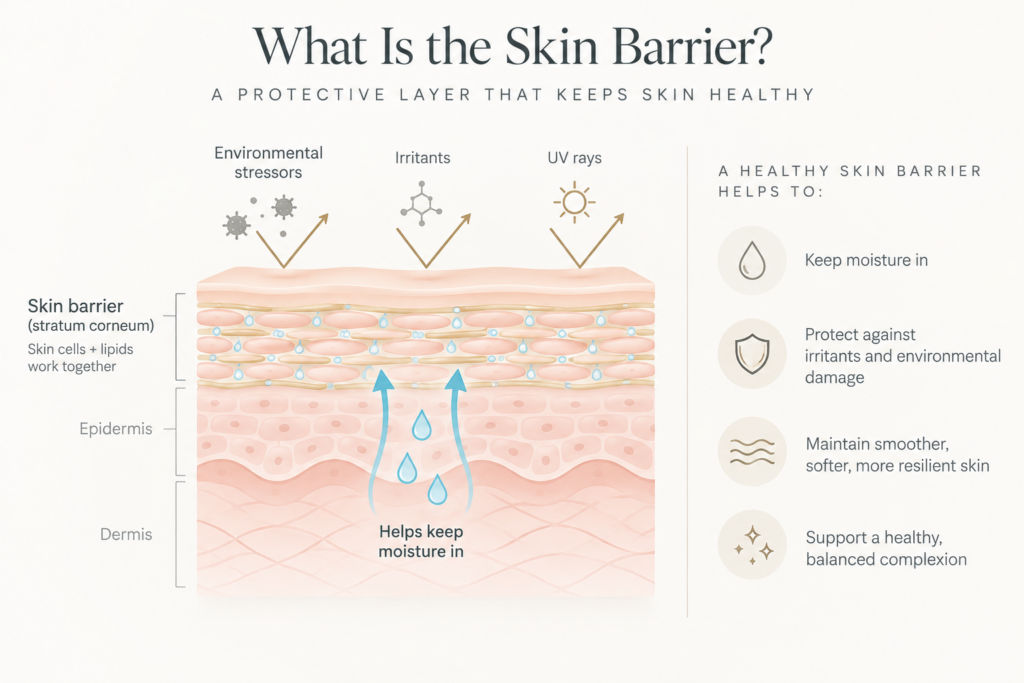
The term “skin barrier” generally refers to the outermost part of the epidermis, particularly the stratum corneum.
One useful way to think about it is as a protective wall. Skin cells provide the structure, while naturally occurring lipids help seal the spaces between them. Together, they help keep water in and potential irritants out.
A healthy skin barrier helps the skin remain hydrated, comfortable and resilient. It also allows it to tolerate everyday environmental exposure and an appropriate skincare routine without becoming excessively reactive.
When that protective structure is compromised, transepidermal water loss can increase. In simple terms, water escapes from the skin more easily. The result can be dryness, flaking and tightness, but barrier damage does not always look obviously “dry.” Some people notice increased oiliness, breakouts, redness or a sudden inability to tolerate products they previously used without difficulty.
This is one reason skin barrier health is relevant to almost every skin type, including oily and acne-prone skin.
How Can You Tell If Your Skin Barrier Is Damaged?
A damaged skin barrier can present differently from one person to another. Common signs include:
- persistent dryness or dehydration
- tightness, particularly after cleansing
- rough or flaky areas
- redness or increased sensitivity
- burning or stinging when skincare is applied
- itching
- a complexion that looks dull despite regular exfoliation
- products that were previously well tolerated suddenly causing irritation
- increased sensitivity to weather, heat or environmental changes
The pattern is often more informative than any one symptom.
For example, someone who has recently introduced several exfoliating acids and a retinoid may notice that their moisturizer suddenly stings. Another patient may develop dry, irritated skin after a change in weather or prolonged exposure to air conditioning. In San Antonio, heat, sun exposure and frequent movement between hot outdoor temperatures and air-conditioned environments can also place additional demands on already dehydrated or sensitive skin.
How Do You Restore a Damaged Skin Barrier?
For many people, restoring the skin barrier starts by doing less. If irritation has followed an increasingly complicated skincare routine, we would usually look at what can temporarily be removed rather than what else should be added.
This may include:
- simplifying your skincare routine
- pausing unnecessary exfoliation
- using a gentle cleanser
- moisturizing consistently
- continuing daily sun protection
Daily sunscreen remains important because UV exposure can contribute to inflammation and ongoing skin damage.
The aim is to give the skin an opportunity to retain moisture and recover without repeatedly exposing it to whatever triggered the irritation. For mild disruption, these changes may be enough. If symptoms are persistent, recurrent or associated with a dermatological condition, professional assessment becomes more important.
Can Professional Treatments Help Restore the Skin Barrier?
Professional treatments can support hydration, recovery and overall barrier function, but the skin needs to be assessed first. If it is actively inflamed, burning or highly reactive, we would usually focus on calming the skin and identifying the cause before introducing treatments that exfoliate or resurface it.
Once the skin is more stable, treatments can be selected according to what it needs.
How Can CO2Lift® Help Dry, Stressed Skin?
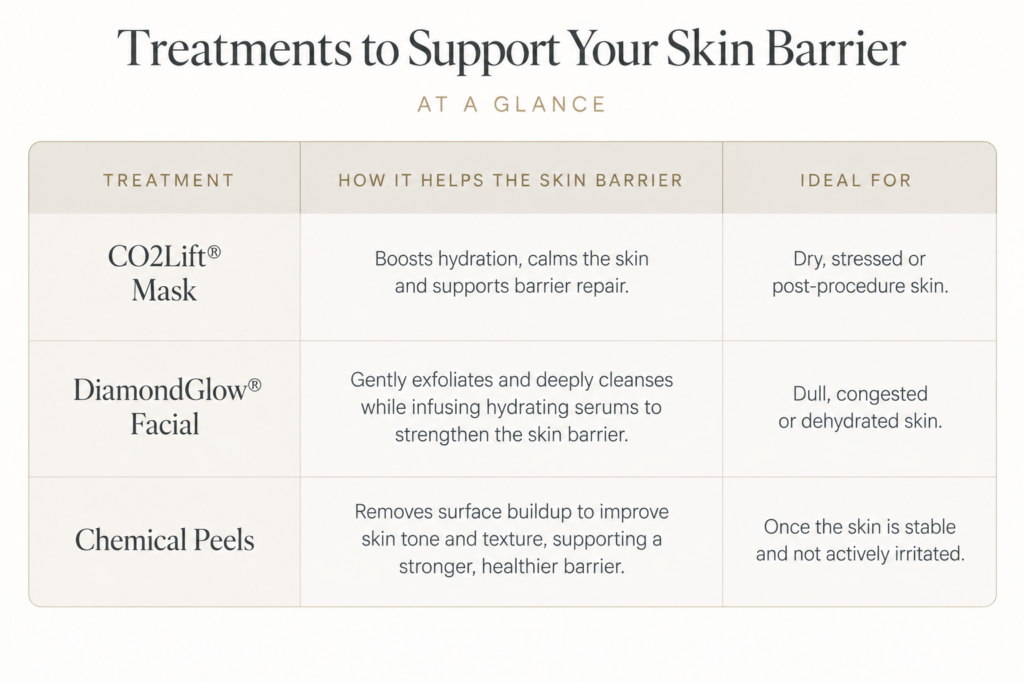
The CO2Lift® Mask is one of the treatments available at LIV Dermatology that is particularly relevant when hydration and recovery are priorities.
CO2Lift® is a medical-grade carboxytherapy treatment. Carbon dioxide applied through the gel mask helps boost oxygenation and circulation within the treated tissue. LIV uses the treatment to support hydration, skin rejuvenation and recovery, and it can also be incorporated following procedures such as lasers, microneedling and peels.
For someone whose skin is dry, dull or stressed, the appeal is that treatment is focused on supporting hydration and skin quality without aggressive resurfacing. There is no downtime, and the mask can be used as a single treatment or as part of a longer-term skin plan.
It is important, however, not to confuse dehydrated or stressed skin with an active dermatological flare. If the skin is inflamed because of eczema, contact dermatitis or another condition, that should be assessed first.
When Might DiamondGlow® Be Appropriate?
DiamondGlow® Facial is another option available at LIV and is specifically listed among the clinic’s treatments for dryness.
DiamondGlow® combines three processes in one treatment: exfoliation, extraction and infusion of a selected professional serum. The diamond-tipped device removes surface buildup while extracting debris and delivering a serum selected according to the patient’s skin concerns.
For skin that is dull, congested or dehydrated but otherwise stable, this can help improve smoothness and hydration while refreshing the surface. The word “stable” matters here. If the skin is burning, visibly inflamed or reacting to almost everything applied to it, exfoliation may not be the first step we choose. We would generally want to settle that reactivity before deciding whether a resurfacing facial is appropriate.
Should You Have a Chemical Peel If Your Skin Barrier Is Damaged?
Chemical peels deliberately exfoliate the skin to improve concerns such as pigmentation, acne, rough texture and fine lines. At LIV, peel strength can be customized according to the patient’s skin type, concerns and desired level of correction. That makes them useful treatments, but an actively damaged skin barrier is a different issue from skin that simply needs resurfacing.
If the skin is already raw, inflamed or unusually sensitive, adding controlled exfoliation may increase irritation. We would normally focus on restoring skin stability first and then reconsider treatments for pigmentation, texture or acne once the skin is tolerating its basic routine again. The same principle applies to more intensive resurfacing treatments. A treatment can be excellent for the right concern and still be inappropriate at a particular moment.
How Long Does It Take to Restore a Healthy Skin Barrier?
Recovery time depends on how disrupted the skin barrier is and what caused it. Mild irritation from overusing skincare may settle relatively quickly once the trigger is removed, while ongoing inflammation or conditions such as eczema or dermatitis can take longer and may require professional treatment.
Rather than focusing on a fixed timeline, look for signs of improvement such as less stinging and flaking, greater comfort after cleansing and better tolerance of a simple skincare routine. Active ingredients should then be reintroduced gradually rather than all at once.
Long-term barrier health is largely about consistency. Gentle cleansing, appropriate moisturization, daily sun protection and sensible use of active ingredients help keep skin resilient. At LIV Dermatology, if the barrier is compromised, we would usually prioritize restoring stability before progressing to treatments for concerns such as pigmentation or texture. A healthier skin barrier provides a stronger foundation for whatever comes next.
Frequently Asked Questions About the Skin Barrier
Can stress affect the skin barrier?
Stress can influence inflammatory processes in the skin and may aggravate conditions such as eczema in susceptible individuals. If you notice that irritation repeatedly appears during periods of stress, it can be useful to discuss the pattern during your dermatology assessment.
Can you damage your skin barrier without using strong skincare?
Yes. Weather, frequent washing, hot water, low humidity, irritants and underlying skin conditions can all affect barrier function. Active skincare ingredients are only one possible cause.
Why does my sunscreen suddenly sting?
Products that normally feel comfortable can sting when the skin barrier is compromised. However, persistent reactions may also indicate sensitivity or contact dermatitis. If the problem continues even after your skin settles, professional assessment can help determine whether a particular ingredient may be contributing.
Can acne-prone skin have a damaged skin barrier?
Yes. Acne-prone skin can still become dehydrated, irritated and barrier-impaired, particularly when several drying or exfoliating products are used together. Treating acne effectively does not require making the skin feel stripped or tight.
Should I stop all skincare if my skin barrier is damaged?
Not necessarily. A basic routine still has an important role, particularly gentle cleansing, moisturization and sun protection. What often needs reconsidering is the number and frequency of potentially irritating active products. If you are using prescription dermatology treatments, speak with your provider before changing them.
When Should You Get Your Skin Professionally Assessed?
If your skin remains persistently dry, sensitive, itchy or inflamed despite simplifying your routine, it may be time to look beyond skincare products alone.
At LIV Dermatology in San Antonio, our dermatology and aesthetic teams can assess whether you are dealing with temporary barrier disruption, dehydration or an underlying skin condition, then build a plan around what your skin actually needs.
Whether that means medical management, barrier repair, a hydrating treatment or simply allowing the skin more time before progressing to corrective procedures, the goal is the same: creating healthier, more resilient skin before asking it to do more.
Book a consultation with LIV Dermatology in San Antonio to discuss your skin concerns and find an appropriate next step.